
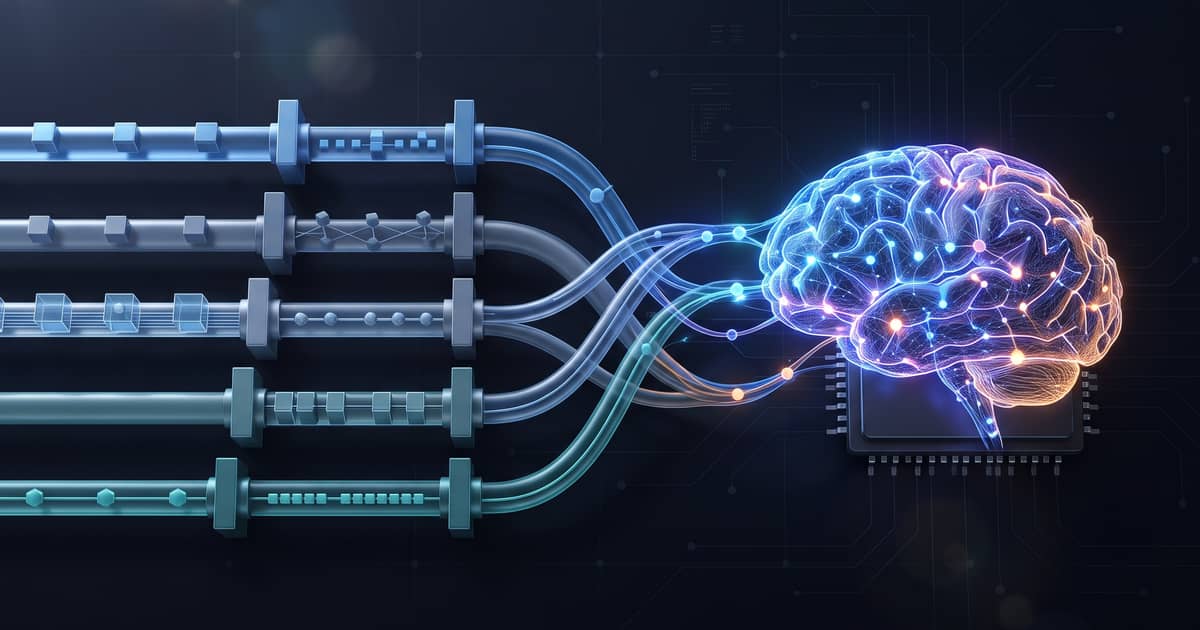

Executive Summary (Quick Answer): Enterprise AI engineering is moving decisively past raw natural language prompting toward deterministic, multi-layer Agent Harnesses. Three landmark open-source releases tracked in Reposen's 265-repository radar illustrate this architectural standardization: Alibaba's alibaba/open-code-review (v1.13.11, 53,528 stars) proves that hybrid pipelines combining static analyzers with LLMs eliminate position drift and token waste; Tencent's Tencent/LoopForge (v0.4.0, 2,937 stars) enforces repeatable Standard Operating Procedures (SOPs) with explicit Human Approval Gates inside isolated sandboxes; and NVIDIA's NVIDIA/SkillEvaluator (v0.9.0, 3,241 stars) brings deterministic CI/CD quality gating to AI agent skills before they ever reach production.
For the past two years, developer teams treated Large Language Models as monolithic reasoning engines: paste a massive diff or task description into a chat window, tweak a system prompt, and hope the output compiled. At startup scale, ad-hoc prompting felt magical. At enterprise production scale, it collapsed under hallucinated feedback, runaway API costs, and unverified autonomous commits.
Across the 265 curated open-source repositories tracked by Reposen, a clear industry consensus has crystallized in late 2026: the deterministic harness surrounding the model matters more than the raw foundation model itself.
Rather than competing solely on larger context windows, major engineering organizations including Alibaba, Tencent, and NVIDIA are open-sourcing the exact operational scaffolding required to run autonomous coding agents safely. In this architectural deep dive, we dissect the three foundational layers of the modern enterprise AI Agent Stack: Hybrid Code Review, Human-in-the-Loop Orchestration, and Continuous Skill Evaluation.
1. The Code Review Layer: Determinism Meets LLMs in Alibaba's open-code-review
Handing an entire 3,000-line pull request directly to a general-purpose LLM exposes two well-documented failure modes in enterprise software delivery:
- Position Drift: As diff hunks expand across dozens of files, LLMs lose track of exact unified diff line offsets, posting review comments on unrelated lines or missing changed boundaries entirely.
- Attention Thinning and Unstable Quality: Asking a probabilistic model to simultaneously verify syntax, catch nil-pointer edge cases, enforce team conventions, and check business logic results in noisy, hallucinated comments and massive token burn.
To solve these issues at hyperscale, Alibaba open-sourced alibaba/open-code-review (source on GitHub), written primarily in Go with an accompanying npm CLI wrapper (@alibaba-group/open-code-review). Having surged to 53,528 GitHub stars as of release v1.13.11, its core contribution is an uncompromising Hybrid Pipeline Architecture.
Architectural Shift: Separating Hard Constraints from Dynamic Reasoning
Instead of dumping uncurated Git diffs into a prompt, open-code-review separates every pull request into two distinct execution stages:
Deterministic Engineering
- Run static analyzers (e.g.,
go vetand team linters) - Filter generated lockfiles, vendored code, and formatting noise
- Semantic file bundling (pair
.enand.zhlocalization assets) - Lock exact diff line offsets to eliminate position drift
Agent Logic
- Evaluate cross-file business logic and architectural invariants
- Route via OpenAI, Anthropic, or self-hosted endpoints
- Emit line-anchored, severity-ranked review comments
By offloading syntactic and structural checks to battle-tested deterministic tools such as Go's official go vet static analyzer, open-code-review guarantees that the LLM never wastes tokens hallucinating compiler warnings that static analysis already catches with 100 percent precision.
Meanwhile, its template-driven bundling engine intelligently groups logically coupled files (for example, pairing .en and .zh localization assets or matching interface declarations with implementations) before invoking the LLM. The result is sharper architectural feedback, anchored line indices, and drastically lower token expenditure per pull request.
# Install the lightweight CLI wrapper for local or CI executionnpm install -g @alibaba-group/open-code-review
# Execute deterministic pre-filtering followed by hybrid LLM reviewopen-code-review review --base origin/main --bundle-strategy semantic --format markdown2. The Orchestration Layer: Enforcing Human-in-the-Loop in Tencent's LoopForge
For a Tech Lead, Staff Engineer, or Product Owner (PO), the single largest barrier to deploying autonomous coding agents in production is uncontrolled blast radius. Even a 95 percent accurate agent becomes a liability if the remaining 5 percent pushes broken migrations, leaks environment secrets, or merges unreviewed business logic directly into main.
Tencent tackled this orchestration challenge by open-sourcing Tencent/LoopForge (source on GitHub), a Go-based, self-hosted workflow orchestrator for coding-agent delivery (v0.4.0, 2,937 GitHub stars, distributed via ghcr.io/tencent/loopforge:0.4.0).
Repeatable Standard Operating Procedures (SOPs) for Coding Agents
LoopForge replaces unstructured, single-threaded agent chat sessions with deterministic, repeatable Standard Operating Procedures (SOPs). Instead of trusting a single prompt loop to plan, code, test, and merge, LoopForge orchestrates heterogeneous coding agents (such as Codex or Claude Code) across strict, auditable delivery stages:
- Planning Stage: Generates an explicit specification, impacted file manifest, and acceptance criteria before modifying source code.
- Isolated Sandbox Implementation: Executes code edits inside ephemeral containers leveraging standard Docker Engine isolation boundaries so untrusted commands cannot mutate the host workstation or CI runner.
- Human Approval Gate (Mandatory Checkpoint): Execution halts deterministically at configured governance gates. A human Tech Lead or Product Owner inspects the diff, test telemetry, and generated artifacts, then explicitly clicks Approve before any pull request is opened or deployed.
- Verification and Delivery Stage: Runs automated regression suites and publishes signed release artifacts once human clearance is recorded.
This gated workflow aligns closely with the governance and oversight controls outlined in the NIST AI Risk Management Framework (AI RMF 1.0), which emphasizes human accountability checkpoints for high-impact automated decisions. For teams already hardening developer endpoints against rogue agent tools, as analyzed in our guide on Bumblebee and MCP supply-chain security, LoopForge provides the complementary server-side execution perimeter.
Teams evaluating LoopForge do not need to deploy a massive cluster on day one. Its LoopForge Local CLI brings the exact same staged delivery workflows and approval gates straight to a developer's laptop:
# loopforge.workflow.yamlname: "feature-delivery-sop"runtime: image: "ghcr.io/tencent/loopforge:0.4.0" sandbox: "docker-ephemeral"stages: - id: "plan" agent: "claude-code" artifact: "implementation-plan.md" requireHumanApproval: true - id: "implement" agent: "codex" dependsOn: ["plan"] - id: "verify-and-gate" commands: - "npx tsc --noEmit" - "npm test" requireHumanApproval: true3. The Evaluation Layer: CI/CD Quality Gates for Agent Skills in NVIDIA's SkillEvaluator
Even with deterministic code review and gated orchestration, an enterprise agent stack remains fragile if the underlying tools and plugins exposed to the agent are unreliable. As teams build dozens of internal capabilities over standardized tool interfaces like the Model Context Protocol Specification, a critical operational question emerges: how do you test an agent skill before deploying it to every engineer in your organization?
NVIDIA addressed this blind spot with NVIDIA/SkillEvaluator (source on GitHub), a multi-tier Python evaluation framework (skillevaluator on PyPI, release v0.9.0, 3,241 GitHub stars) that brings continuous integration and automated quality gates directly to agent skills and plugins.
Multi-Tier Evaluation Before Any LLM Token Is Spent
A naive approach to testing AI skills spins up live LLM sessions on every commit, resulting in flaky, slow, and expensive CI runs. SkillEvaluator restructures evaluation into a fast, layered funnel:
- Static Schema and Metadata Audits: Validates skill manifests, instruction clarity, parameter contracts, and formatting constraints deterministically in milliseconds.
- Semantic Overlap Detection: Detects colliding triggers or ambiguous tool descriptions across your skill catalog, preventing routing confusion where an agent invokes the wrong tool because two skills share overlapping intent descriptions.
- Deterministic Quality Scoring: Computes a reproducible composite score (for example,
88/100) and enforces configurable pass thresholds before escalating to live end-to-end LLM execution tests.
Using skillevaluator ci init, engineering teams wire skill verification directly into GitHub Actions so degraded agent instructions or conflicting plugins fail the build just like a broken unit test:
name: "Agent Skill Quality Gate"
on: pull_request: paths: - ".agents/skills/**" - "skills/**"
jobs: evaluate-skills: name: "Run NVIDIA SkillEvaluator" runs-on: ubuntu-latest steps: - name: "Checkout Repository" uses: actions/checkout@v4
- name: "Set Up Python" uses: actions/setup-python@v5 with: python-version: "3.12"
- name: "Install SkillEvaluator" run: pip install skillevaluator==0.9.0
- name: "Run Static & Semantic Skill Gate" run: skillevaluator check ./skills --min-score 85 --detect-overlap --format jsonBy treating agent skills as versioned, testable software artifacts rather than informal markdown notes, NVIDIA's framework prevents silent regressions from cascading across autonomous workflows.
4. Architectural Comparison Matrix: Standardizing the 3-Layer Agent Stack
Together, these three repositories map cleanly onto the complementary layers of a production enterprise AI delivery pipeline. Rather than competing with one another, each tool solves a distinct failure mode:
| Architectural Layer | Reference Repository | Primary Language & Distribution | Core Problem Solved | Key Governance Mechanism |
|---|---|---|---|---|
| Code Review Layer | alibaba/open-code-review (v1.13.11) | Go binary + npm CLI (@alibaba-group/open-code-review) | Diff position drift, noisy reviews, excessive token burn | Deterministic static analysis (go vet) + semantic file bundling before LLM calls |
| Orchestration Layer | Tencent/LoopForge (v0.4.0) | Go + OCI image (ghcr.io/tencent/loopforge:0.4.0) | Unapproved autonomous commits, chaotic multi-agent chats | Staged SOPs, ephemeral Docker sandboxes, mandatory Human Approval Gates |
| Evaluation Layer | NVIDIA/SkillEvaluator (v0.9.0) | Python (skillevaluator on PyPI) | Broken agent plugins, overlapping tool triggers, silent drift | Pre-LLM static scoring, semantic overlap checks, skillevaluator ci init CI gates |
5. Product Owner and Architect Perspective: The Business Value of Deterministic Harnesses
For CTOs, VPs of Engineering, and Product Owners building AI-native software delivery pipelines, the strategic takeaway from Alibaba, Tencent, and NVIDIA is unmistakable: model intelligence is rapidly commoditizing, while operational reliability is the real competitive moat.
Standardizing around these three architectural primitives delivers immediate measurable business returns:
- Predictable Unit Economics: Deterministic pre-filtering and semantic bundling cut LLM review token volumes dramatically while preserving or improving defect detection rates.
- Enterprise Auditability and Compliance: Human Approval Gates and container-isolated SOPs produce cryptographic audit trails showing exactly which agent drafted a change, which tests passed, and which engineer authorized the merge.
- Vendor Independence: Every tool in this emerging infrastructure layer is explicitly model-agnostic, enabling organizations to swap between OpenAI, Anthropic, Gemini, or private open-weight endpoints without rewriting their delivery pipelines.
To explore how these orchestration and evaluation layers connect with standardized tool protocols in production, see our companion architectural breakdown of the MCP ecosystem for production AI agents.
6. Frequently Asked Questions (FAQ)
Why not simply upgrade to a more capable foundation model instead of building a hybrid pipeline?
Even frontier models with million-token context windows experience attention thinning when parsing raw, noisy pull requests containing lockfiles, generated code, and unrelated formatting diffs. Deterministic pre-processing filters noise, enforces compiler-grade static checks at zero token cost, and anchors exact line offsets so the LLM spends its reasoning budget exclusively on high-value logic and security invariants.
Do Alibaba open-code-review, Tencent LoopForge, and NVIDIA SkillEvaluator lock teams into one LLM vendor?
No. Model agnosticism is a defining trait of this new infrastructure wave. alibaba/open-code-review supports OpenAI-compatible, Anthropic, and custom endpoints, while Tencent/LoopForge orchestrates multiple coding agent CLIs (including Codex and Claude Code) under unified SOP definitions. This lets teams route workloads dynamically based on cost, latency, or data residency requirements.
Can engineering teams run these agent infrastructure tools locally before deploying centralized servers?
Yes. All three repositories prioritize frictionless developer adoption. Tencent/LoopForge provides a LoopForge Local CLI workflow for local sandboxed orchestration, alibaba/open-code-review runs directly against local Git branches via its Go binary or npm CLI, and NVIDIA/SkillEvaluator installs via pip install skillevaluator for immediate pre-commit and local CI checks.
How does NVIDIA/SkillEvaluator prevent conflicting AI agent tools in large monorepos?
As organizations accumulate dozens of internal agent skills, overlapping trigger descriptions cause LLM routers to pick the wrong skill nondeterministically. SkillEvaluator runs automated semantic overlap detection across your skill directory alongside static schema scoring, flagging ambiguous skill boundaries inside pull request CI before those skills are merged into production.
Tracking the AI Agent Infrastructure Ecosystem
The shift from fragile prompt hacks to standardized, testable agent infrastructure is accelerating week by week. You can track live GitHub release velocity, breaking changes, and deterministic synthesis notes across all three repositories directly on Reposen:
- Track alibaba/open-code-review on Reposen for hybrid code review pipeline releases.
- Track Tencent/LoopForge on Reposen for self-hosted SOP orchestration and approval gate updates.
- Track NVIDIA/SkillEvaluator on Reposen for agent skill evaluation and CI/CD quality gate milestones.