
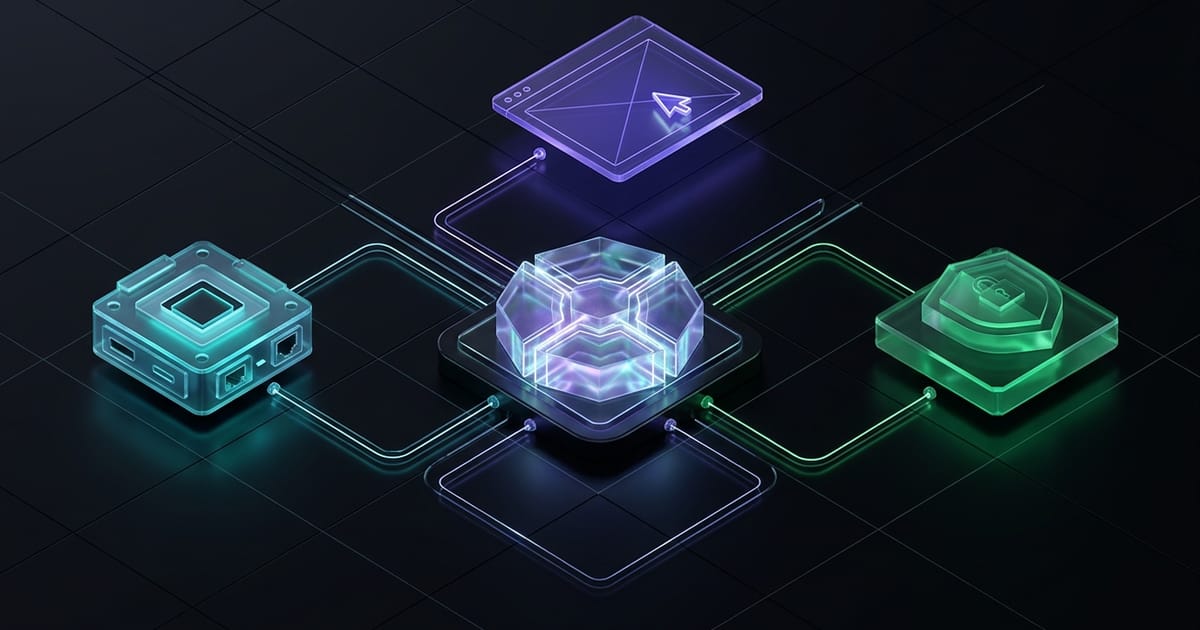
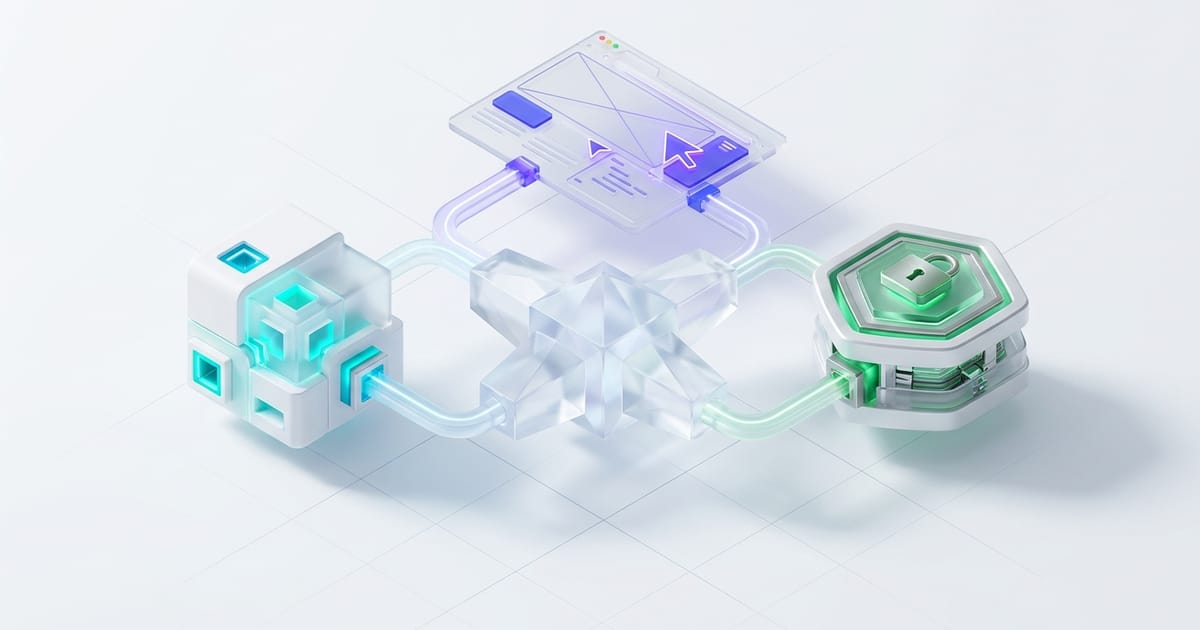
Executive Summary (Quick Answer): In late 2026, open-source AI engineering is converging around a clear three-layer production architecture anchored by the Model Context Protocol (MCP). According to live release telemetry tracked on the Reposen AI & Agent Radar and highlighted in today's Daily Cortex MCP Protocol Surge brief, teams are pairing standardized tool interfaces from modelcontextprotocol/typescript-sdk with autonomous browser runners like browser-use/browser-use (v1.0.2rc1) and OIDC-hardened durable execution engines such as triggerdotdev/trigger.dev (v4.8.4).
For the past two years, building an AI agent meant wiring fragile custom function schemas around a single model provider and hoping long-running tool calls did not time out inside a serverless handler. Across the repositories tracked by Reposen, that ad-hoc era is rapidly ending.
Instead of inventing proprietary tool wrappers for every application, engineering teams are standardizing on MCP as the universal contract between reasoning models, headless browsers, and cloud infrastructure. When combined with strict TypeScript validation, machine-bound authentication, and short-lived OIDC credentials, AI agents are finally gaining the operational reliability required for real production workloads.
Why the Model Context Protocol (MCP) Became the Missing Standard
The core insight behind the Model Context Protocol specification is separation of concerns. Just as HTTP standardized how browsers talk to web servers, MCP decouples the AI Host (where the LLM reasons and plans) from the MCP Server (where tools, resources, and prompts actually execute).
On Reposen, developer interest in turning ordinary web surfaces into agent-ready capabilities continues to accelerate. For example, our Community Pulse recently surfaced strong Hacker News engagement around Launch HN: Pomerado (YC F26), Turn any website into an MCP for agents, sparking 46 technical comments on how existing SaaS dashboards and internal portals can expose structured MCP tools without full backend rewrites.
Key Architectural Shifts in the MCP TypeScript Ecosystem
- Modular v2 Architecture and Broad Validator Support: While the
v1.xline of @modelcontextprotocol/typescript-sdk remains actively maintained for production stability (most recently shipping v1.32.2 with fixes for registering capabilities afterconnect()and stricterTransporttyping), the v2 architecture splits core packages into@modelcontextprotocol/serverand@modelcontextprotocol/clientwith support for Node.js, Bun, Deno, and Standard Schema validators including Zod, Valibot, and ArkType. - Stateless Scaling Over Streamable HTTP: Modern MCP deployments eliminate rigid persistent-session bottlenecks, allowing stateless tool invocations to sit cleanly behind standard API gateways and load balancers.
- Composable Tool, Resource, and Prompt Primitives: Servers expose executable Tools for mutations, read-only Resources for live database or file context, and reusable Prompts for repeatable workflows.
Below is a clean, production-minded TypeScript example showing how an MCP server validates inputs before executing an agent action:
import { McpServer } from "@modelcontextprotocol/server";import { StdioServerTransport } from "@modelcontextprotocol/server/stdio";import { z } from "zod";
const server = new McpServer({ name: "reposen-release-inspector", version: "1.0.0",});
server.registerTool( "check-package-compatibility", { title: "Check Package Compatibility", description: "Inspect compatibility status and migration effort for a tracked repository release.", inputSchema: z.object({ repoSlug: z.string().min(3), targetVersion: z.string(), }), }, async ({ repoSlug, targetVersion }) => { // Query internal service or Reposen radar telemetry return { content: [ { type: "text", text: `Verified ${repoSlug}@${targetVersion}: compatible drop-in upgrade, zero breaking TagEdge conflicts.`, }, ], }; });
async function start() { const transport = new StdioServerTransport(); await server.connect(transport);}
start();[Inline Visual Placeholder 1] Image Prompt: Minimalist dark-mode technical architecture diagram showing an AI Host communicating over Streamable HTTP and stdio transports with a modular MCP Server (Tools, Resources, Prompts), connected to a headless Chromium browser and a background task queue. Clean slate and cyan vector lines, dark obsidian background#090b10, crisp labels. SEO Alt Text:Stateless Model Context Protocol architecture diagram showing AI host, TypeScript MCP server primitives, and browser transport layer
Browser Automation Enters the MCP Era With browser-use v1.0.2rc1
Not every system has a clean REST or GraphQL API, and that is precisely why browser-use/browser-use has surged past 120,500 GitHub stars on the Reposen browser-use radar page.
In its v1.0.2rc1 release (tracked November 10, 2026), browser-use sharpened its MCP and Chrome DevTools Protocol (CDP) ergonomics for real-world agent loops:
- Resilient
--cli-mcpFallback: When Chrome remote debugging is disabled,--cli-mcpnow launches and drives its own managed Chromium instance automatically while instructing the model on how users can attach their local Chrome session viachrome://inspect. - Fast Failure on Frozen JS Dialogs: CLI and
--cli-mcpCDP calls enforce a strict 20-second timeout ceiling, failing fast with an explicit error when a blocking JavaScript alert or dialog freezes a tab rather than hanging an entire agent worker indefinitely. - Built-In Agent Feedback Loops: New telemetry hooks such as
report_issueinside the agent,browser-use feedback, and thebrowser_feedbackMCP tool give teams structured visibility when DOM automation hits edge cases.
For developers orchestrating web workflows, combining an MCP TypeScript client with browser-use means your agent does not need brittle, hardcoded CSS selectors scattered across application code. Instead, browser navigation, form extraction, and state verification become standardized, schema-checked capabilities.
Durable Execution and Zero-Secret Security: The Trigger.dev v4.8.4 Blueprint
Connecting an LLM to a browser or external API solves capability, but production adoption depends on durability and security. Agents routinely wait on human approvals, multi-minute scraping tasks, or multi-step retries that break standard 10-to-60-second serverless function limits.
That shift is clearly visible in today's Daily Cortex executive brief, which highlights triggerdotdev/trigger.dev (16,744 stars) and its v4.8.4 release as a blueprint for enterprise-ready agent runtimes.
Three Security Milestones Shipped in Trigger.dev v4.8.3 and v4.8.4
- Task-Level AWS IAM Isolation: By introducing opt-in AWS session tags via
awsCredentialProvider({ sessionTags: true }), teams can scope IAM permissions down to individual background tasks instead of sharing broad static AWS keys across every agent workflow. - OIDC Secret Retrieval With Infisical: The new
@trigger.dev/sdk/oidc/infisicalintegration (infisicalAccessToken) lets long-running agent jobs authenticate via short-lived OIDC tokens rather than storing hardcoded API secrets in environment variables. - Hardened
chat.agentInput Boundaries and Machine-Bound MCP Logins: Trigger.dev hardenedchat.agentso client updates map strictly to user messages or direct responses to previously dispatched agent tool calls, building onv4.8.3where CLI and MCP logins are cryptographically bound to the originating machine.
You can inspect full release compatibility assertions and upgrade commands directly on the Reposen Trigger.dev package page.
[Inline Visual Placeholder 2] Image Prompt: Clean dark-mode security sequence diagram showing a Trigger.dev agent task exchanging a short-lived OIDC token with AWS IAM Session Tags and Infisical Vault before invoking an MCP tool, contrasted against a crossed-out hardcoded.envsecret icon. High-contrast emerald and violet accents on dark slate. SEO Alt Text:Zero-secret OIDC authentication flow for AI agent background jobs using Trigger.dev v4.8.4 AWS session tags and Infisical
Comparing the Leading Open-Source AI Agent Stack in Late 2026
When designing a production AI system today, teams rarely rely on a single library. Based on live metrics and recent release velocity tracked by the Reposen Sense Engine, here is how the core building blocks fit together:
| Repository | Primary Layer | Latest Tracked Release | GitHub Stars | Production Differentiator |
|---|---|---|---|---|
| modelcontextprotocol/typescript-sdk | Protocol & Tool Interface | v1.32.2 (v2 modular core) | 13,720+ | Standardizes Tools, Resources, Prompts, and transport layers across hosts |
| browser-use/browser-use | Autonomous Web Execution | v1.0.2rc1 | 120,593+ | --cli-mcp managed Chromium fallback and 20s frozen-dialog fail-fast |
| triggerdotdev/trigger.dev | Durable Agent Runtime | v4.8.4 | 16,744+ | No serverless timeouts, OIDC workload identity, AWS session tags |
| mastra-ai/mastra | TypeScript Agent Framework | mastracode@0.49.0 | 29,382+ | Typed workflows, unified RAG memory, MCP tools, and built-in evals |
| CopilotKit/CopilotKit | Frontend CoAgents & UI | v1.85.0 | 38,546+ | Shared frontend state and generative UI bindings for Next.js apps |
| vercel/ai | Unified LLM Streaming SDK | @ai-sdk/zai@3.0.47 | 27,780+ | Provider-agnostic streaming, structured outputs, and multi-step tool loops |
Practical Adoption Checklist for Engineering Teams
If you are planning to ship or upgrade an MCP-powered agent stack this quarter, prioritize these four engineering practices:
- Pin Stable Protocol Releases and Audit Pre-Releases: As documented in our Sense Engine Methodology, pre-release channels (such as nightly builds in
lobehub/lobe-chator release candidates likebrowser-use v1.0.2rc1) should always be validated in staging before production rollout. - Replace Static Secrets With OIDC Workload Identity: Adopt OIDC-based authentication (
awsCredentialProviderwith session tags or@trigger.dev/sdk/oidc/infisical) whenever an autonomous agent interacts with cloud storage, billing APIs, or production databases. - Enforce Strict Input Schemas on Every MCP Tool: Use Zod or Standard Schema definitions on every
registerToolcall so malformed LLM arguments fail cleanly at the validation boundary before touching a browser or database. - Pair Backend Durability With Frontend Observability: Combine durable execution frameworks like Mastra or Trigger.dev with structured UI layers like CopilotKit and Vercel AI SDK so users can inspect, pause, and approve high-impact agent actions.
Frequently Asked Questions (FAQ)
What is the Model Context Protocol (MCP) used for in production AI agents?
The Model Context Protocol (MCP) provides an open, standardized interface for connecting AI models to external tools, live data resources, and prompt templates. Instead of writing custom integration code for every LLM provider, teams build one MCP server and reuse it across multiple AI hosts and agent frameworks.
How does browser-use work with MCP in v1.0.2rc1?
In browser-use v1.0.2rc1, the --cli-mcp mode exposes browser automation over MCP while automatically falling back to a managed Chromium instance if Chrome remote debugging is disabled. It also enforces a 20-second CDP call timeout so pages blocked by JavaScript dialogs fail quickly with clear diagnostics.
Why do production AI agents need durable execution tools like Trigger.dev?
Autonomous AI agents often perform multi-step reasoning, web automation, and human-in-the-loop approvals that exceed standard HTTP request timeouts. Trigger.dev eliminates serverless timeouts while adding enterprise security primitives in v4.8.4, including AWS IAM session tags and OIDC token authentication.
Where can I track live compatibility updates for MCP and AI agent repositories?
You can monitor real-time .atom release feeds, breaking-change flags, and daily synthesized engineering briefs on the Reposen AI & Agent Radar and the Daily Cortex Archive.