
Executive Summary (Quick Answer): Bumblebee is an open-source, zero-dependency developer security scanner engineered by Perplexity AI to neutralize the emerging supply-chain crisis surrounding the Model Context Protocol (MCP). By compiling directly to a single, statically linked Go binary, Bumblebee audits developer environments, AI server configuration manifests, IDE extensions, and global package ecosystems purely through read-only static inspection. Unlike traditional agent tools that execute untrusted code or rely on heavy node runtimes, Bumblebee inspects configuration trees without running post-install scripts. For engineering leaders and security architects, it provides a deterministic, headless gatekeeper that slots directly into pre-commit workflows and CI/CD pipelines, halting Remote Code Execution (RCE) exploits and credential exfiltration before malicious AI servers reach developer workstations.
The widespread adoption of autonomous AI coding assistants, agentic IDEs, and local reasoning models has accelerated developer productivity at an unprecedented rate. However, this productivity surge has introduced a profound architectural vulnerability into modern engineering organizations: the unauthenticated expansion of local agent capabilities.
As engineering teams grant AI systems direct agency over terminals, filesystems, and development databases, the boundary between benign tool integration and arbitrary Remote Code Execution (RCE) has collapsed. Developers routinely install unvetted third-party servers to expand their AI agent's context, inadvertently exposing internal networks, proprietary intellectual property, and environment secrets to malicious supply-chain actors.
To address this critical architectural blind spot, Perplexity AI developed and open-sourced Bumblebee, an ultra-fast, zero-dependency security scanner designed specifically to audit developer endpoints and AI configurations. In this architectural deep dive, we examine why the Model Context Protocol has become a prime attack surface, dissect Bumblebee's read-only inspection engine, evaluate why Go represents the optimal runtime for supply-chain defense, and demonstrate how to deploy Bumblebee as an automated CI/CD gatekeeper.
1. The MCP Revolution and the Emerging Threat Landscape
The emergence of the Model Context Protocol (MCP), open-sourced by Anthropic and rapidly adopted across the AI ecosystem, solved one of the fundamental limitations of large language models: contextual isolation. By establishing a standardized client-server protocol over JSON-RPC, MCP enables AI agents to query external databases, interact with local git repositories, and execute developer toolchains through structured interfaces.
However, from an information security perspective, the rapid growth of the MCP ecosystem has recreated the supply-chain vulnerabilities of early package managers, amplified by autonomous agent execution:
- Unvetted Privilege Delegation: MCP servers run locally under the active user's permissions. An MCP server designed to inspect files possesses identical read, write, and network privileges as the developer operating the workstation.
- The "RCE-as-a-Service" Paradox: When a developer instructs an AI assistant to connect to a community-contributed MCP server, they are essentially downloading and running uncompiled or interpreted code (often raw Python or Node.js scripts) without code review, sandbox constraints, or cryptographic signature verification.
- Silent Credential Exfiltration: Poisoned MCP servers can harvest sensitive environment variables (
.env,AWS_SECRET_ACCESS_KEY,GITHUB_TOKEN), scan bash history files, or establish persistent reverse shells back to adversary command-and-control servers during normal LLM query lifecycles.
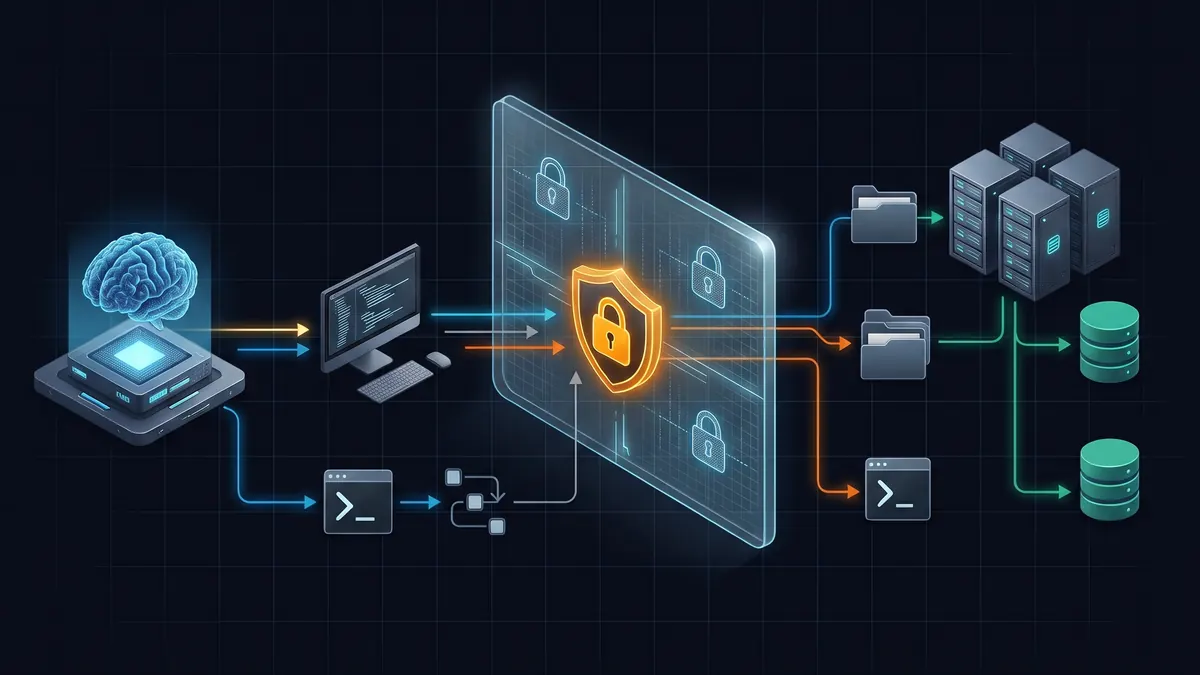
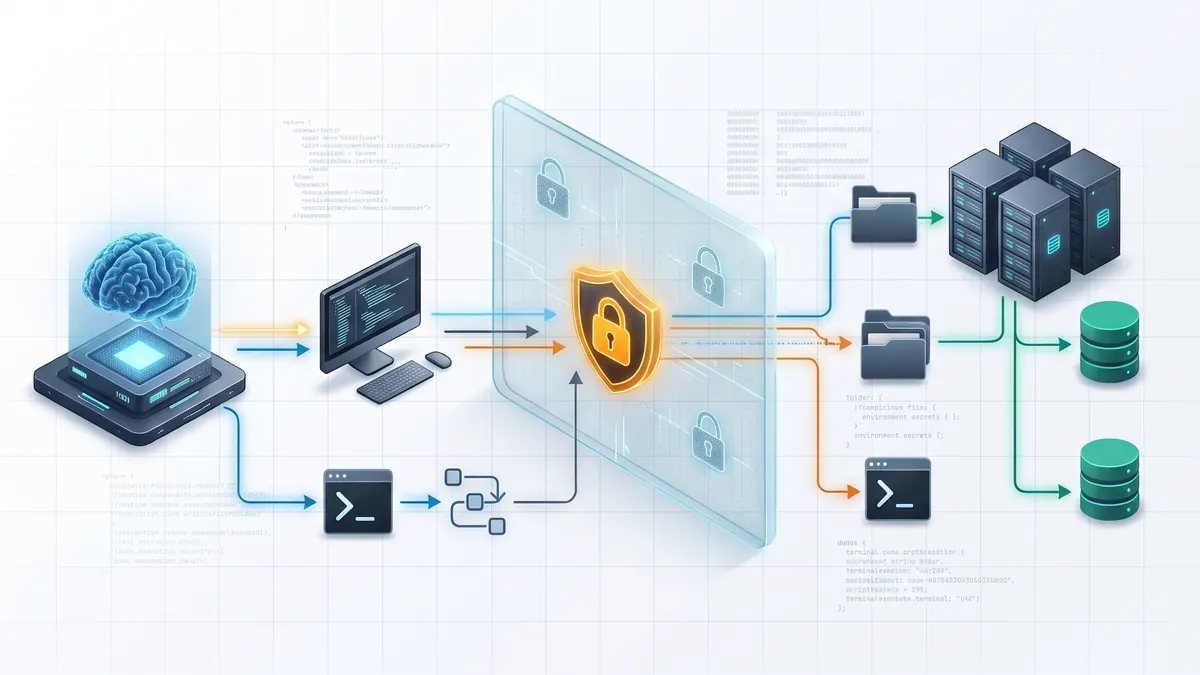
Figure 1: Anatomy of an MCP supply chain exploit, illustrating how unverified server configurations bypass perimeter firewalls and expose developer secrets to untrusted endpoints.
This attack vector aligns with the critical risks documented in the OWASP Top 10 for Large Language Model Applications, specifically LLM07 (System Prompt Leakage) and LLM02 (Sensitive Information Disclosure). Unlike traditional enterprise web applications guarded by Web Application Firewalls (WAFs) and egress proxies, developer laptops exist inside the trusted corporate perimeter, making poisoned MCP servers a direct conduit into internal git repositories and staging infrastructure.
2. Enter Bumblebee: The Zero-Dependency Sentinel
Recognizing that existing security scanners were either too heavy, too intrusive, or blind to AI configuration files, Perplexity AI engineered Bumblebee to operate as an immutable, lightning-fast workstation guardian.
Rather than acting as a heavyweight Endpoint Detection and Response (EDR) daemon that intercepts system calls and consumes gigabytes of memory, Bumblebee is designed around a singular design philosophy: instantaneous, deterministic, read-only static analysis.
Why Go? The Security Rationale Behind the Language Choice
The decision to build Bumblebee in Go, rather than Python, Rust, or TypeScript, represents a deliberate engineering trade-off tailored for incident response and zero-trust supply chains:
- Statically Linked Single Binary: Go binaries compile down to a standalone machine code executable containing all necessary runtime libraries. A developer or CI worker does not need Python 3.12, Node.js v20, or a Rust toolchain installed to run the scanner.
- Elimination of "Scanner Inception": Running an npm-based or pip-based security tool to audit a potentially compromised environment is inherently dangerous. If the local package manager itself is hijacked, running
npx mcp-scannerorpip install scannercould trigger malicious pre-install hooks, compromising the auditor. A standalone Go binary eliminates this recursive supply-chain vector entirely. - Predictable Memory Footprint: Because Bumblebee does not carry the memory overhead of a V8 engine or Python runtime interpreter, it executes multi-gigabyte directory audits in milliseconds with a transient memory footprint under 30MB.
- Cross-Platform Parity: With native cross-compilation support in the Go toolchain, identical scanning logic executes deterministically across macOS (Darwin ARM64 and AMD64) and Linux environments without behavioral divergence.
3. Deep Architectural Analysis: The Read-Only Scanning Engine
At the core of Bumblebee is a strict architectural guarantee: the scanner is entirely read-only. It never modifies configuration files, never alters file permissions, never executes post-install hooks, and never attempts automatic remediation. This prevents accidental corruption of complex developer configurations and guarantees that running a scan cannot destabilize an active engineering setup.
Bumblebee orchestrates its analysis across three distinct endpoint vectors:
MCP Configs
claude_desktop_config.jsoncursor_config.json- Command paths & shell args
- Environment variable leaks
IDE Plugins
~/.vscode/extensions- Extension manifest integrity
- Permission scope audits
- Suspicious telemetry sinks
Global Packages
npmglobal modules- Typosquatting heuristics
- Hijacked maintainer tags
- Known CVE signature checks
Vector 1: MCP Configuration and Command Path Analysis
Bumblebee locates and parses configuration files generated by popular AI clients, including Claude Desktop (claude_desktop_config.json) and AI-enhanced IDEs like Cursor and VS Code.
The engine inspects the declared mcpServers registry to flag high-risk execution signatures:
- Dangerous Interpreters: Executing raw shell scripts or unsandboxed commands (
bash -c,sh,powershell) rather than vetted binaries. - Relative Path Traversal: Commands targeting relative or temporary directories (
/tmp,../../bin) rather than cryptographically locked global binary paths. - Plaintext Secret Exposure: Hardcoded API keys, bearer tokens, or database passwords embedded directly in configuration argument arrays (
args) or environment blocks (env).
Vector 2: IDE Extension and Plugin Integrity
Modern developer extensions frequently request broad capabilities, including clipboard access, terminal creation, and outbound network access. Bumblebee traverses extension directories (such as ~/.vscode/extensions and JetBrains plugin folders), parsing package.json manifests to identify:
- Extensions requesting permissions disproportionate to their stated utility.
- Unsigned or newly published extensions mimicking popular developer utilities (typosquatting).
- Embedded scripts attempting outbound connections to unverified external domains.
Vector 3: Global Package Registry Audits
Global package directories (npm -g, pip, cargo install) represent persistent vectors for developer workstation contamination. Bumblebee audits global package manifests against known vulnerability databases and behavioral heuristics, identifying packages that leverage suspicious lifecycle scripts (preinstall, postinstall) to alter system binaries.
The following Go code snippet demonstrates how Bumblebee safely parses and evaluates MCP configuration models without invoking runtime code:
package scanner
import ( "encoding/json" "fmt" "os" "strings")
// MCPServerDefinition models the structured declaration of an MCP servertype MCPServerDefinition struct { Command string `json:"command"` Args []string `json:"args"` Env map[string]string `json:"env"`}
type MCPConfiguration struct { MCPServers map[string]MCPServerDefinition `json:"mcpServers"`}
type SecurityFinding struct { ServerName string `json:"serverName"` Severity string `json:"severity"` RuleID string `json:"ruleId"` Message string `json:"message"`}
// AuditMCPConfigFile performs read-only static analysis on an MCP config manifestfunc AuditMCPConfigFile(configPath string) ([]SecurityFinding, error) { fileData, err := os.ReadFile(configPath) if err != nil { return nil, fmt.Errorf("failed to read config: %w", err) }
var config MCPConfiguration if err := json.Unmarshal(fileData, &config); err != nil { return nil, fmt.Errorf("failed to parse JSON schema: %w", err) }
var findings []SecurityFinding
for serverName, serverDef := range config.MCPServers { // Rule 1: Flag dangerous direct shell invocation if strings.HasSuffix(serverDef.Command, "bash") || strings.HasSuffix(serverDef.Command, "sh") { findings = append(findings, SecurityFinding{ ServerName: serverName, Severity: "CRITICAL", RuleID: "MCP-RCE-001", Message: "Server directly executes raw shell interpreter, enabling arbitrary script execution.", }) }
// Rule 2: Detect plaintext token leaks in environment configuration for envKey, envVal := range serverDef.Env { lowerKey := strings.ToLower(envKey) if strings.Contains(lowerKey, "key") || strings.Contains(lowerKey, "secret") || strings.Contains(lowerKey, "token") { if len(envVal) > 0 && !strings.HasPrefix(envVal, "$") { findings = append(findings, SecurityFinding{ ServerName: serverName, Severity: "HIGH", RuleID: "MCP-LEAK-002", Message: fmt.Sprintf("Plaintext credential detected in environment variable: %s", envKey), }) } } } }
return findings, nil}4. Product Strategy: CI/CD Pipeline and Pre-Commit Integration
For VP of Engineering and DevSecOps leaders, the primary metric for security tooling adoption is frictionlessness. A security tool that slows down compilation or requires complex daemon management is quickly bypassed by software engineers.
Bumblebee solves this operational challenge by providing machine-readable JSON output and sub-second execution speeds, making it trivial to embed into automated governance pipelines.
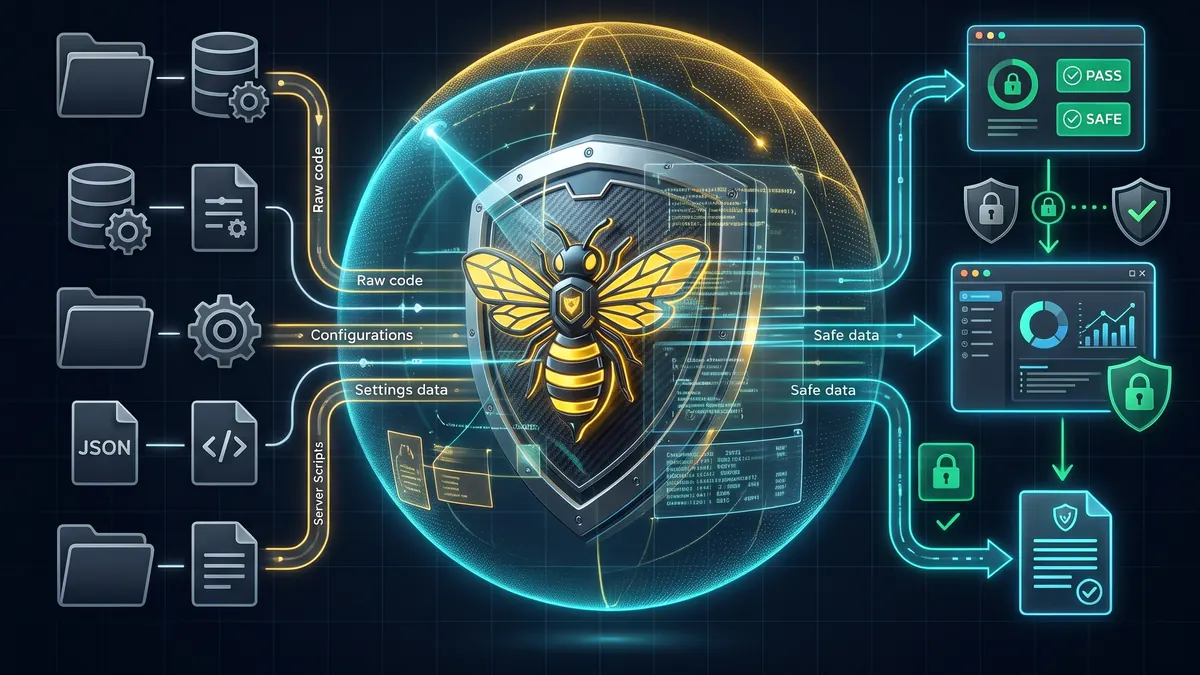
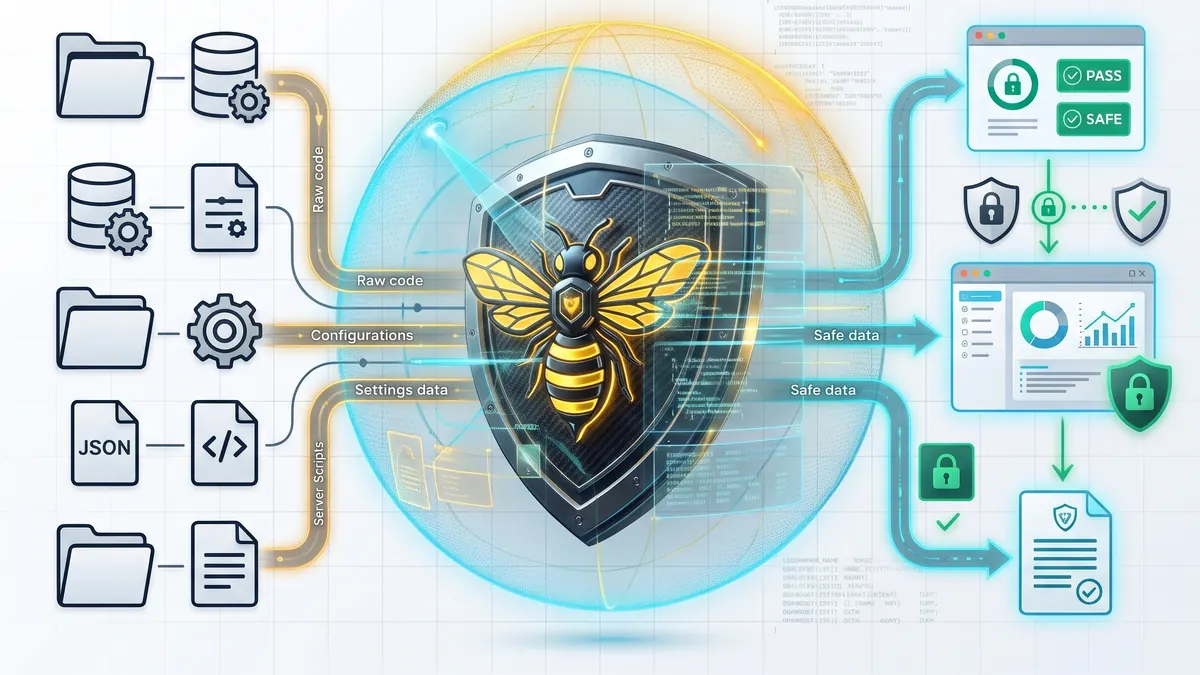
Figure 2: Bumblebee automated security workflow, showing static analysis execution during local pre-commit hooks and centralized CI/CD pull request gating.
Running Bumblebee Locally
Executing Bumblebee in a developer terminal produces concise, structured telemetry:
# Run standalone audit against local developer environment./bumblebee scan --format json --output report.json
# Sample JSON Output:# {# "timestamp": "2026-11-16T19:00:00Z",# "scannedTargets": ["~/.config/Claude/claude_desktop_config.json", "~/.vscode/extensions"],# "findingsCount": 1,# "findings": [# {# "target": "unverified-github-mcp",# "severity": "CRITICAL",# "rule": "UNSANDBOXED_INTERPRETER_EXEC",# "recommendation": "Migrate server to containerized sandbox or verify maintainer signature."# }# ]# }Implementing Automated CI/CD Gating with GitHub Actions
To guarantee that poisoned developer configurations do not get committed to shared repositories or run on self-hosted CI runners, teams can integrate Bumblebee into GitHub Actions workflows:
name: "Supply Chain & MCP Security Gate"
on: push: branches: ["main"] pull_request: branches: ["main"]
jobs: audit-supply-chain: name: "Run Bumblebee Security Audit" runs-on: ubuntu-latest steps: - name: "Checkout Repository" uses: actions/checkout@v4
- name: "Download Bumblebee Binary" run: | curl -sSL https://github.com/perplexityai/bumblebee/releases/latest/download/bumblebee_linux_amd64 -o bumblebee chmod +x bumblebee
- name: "Execute Static Supply-Chain Scan" run: | ./bumblebee scan --fail-on=HIGH --format=json > bumblebee-report.json
- name: "Upload Security Audit Artifact" if: always() uses: actions/upload-artifact@v4 with: name: bumblebee-security-report path: bumblebee-report.jsonBy configuring --fail-on=HIGH, any pull request introducing an unauthenticated MCP configuration or an unpinned shell invocation is automatically blocked, enforcing organizational compliance without human manual review.
5. Comparative Architecture Matrix: Bumblebee vs Traditional Scanners
To understand where Bumblebee fits within an enterprise security stack, it is essential to contrast its specialized scope against traditional vulnerability scanners, static analysis tools, and operating system EDR agents:
| Architectural Metric | Bumblebee (Perplexity AI) | Traditional SCA (e.g., Snyk, Trivy) | Static Analysis (SAST e.g., Semgrep) | Enterprise EDR (e.g., CrowdStrike) |
|---|---|---|---|---|
| Primary Scope | AI Supply Chain, MCP Configs, IDE Extensions | Application Dependencies (package.json, lockfiles) | Application Source Code Logic | OS System Calls, Active Process Memory |
| Runtime Footprint | Single Static Binary (<25MB), Zero Dependencies | Requires Node/Java/Python or Docker container | Language-specific AST parsers, High CPU | Persistent Kernel Daemon, High Memory |
| Execution Mode | Strictly Read-Only Static Inspection | Scans files, may query remote vulnerability APIs | Parses AST in repository files | Active Kernel Interception, Process Termination |
| MCP Protocol Awareness | Native JSON-RPC schema & command path heuristics | None (treats MCP configs as raw JSON) | Rule-based (requires custom semantic rules) | None (flags unexpected outbound child processes) |
| Execution Latency | Sub-second (<300ms typical) | 10 seconds to 2 minutes | 30 seconds to several minutes | Continuous runtime monitoring |
| Remediation Action | Telemetry and reporting only (Safe by design) | Suggests dependency upgrades or automated PRs | Suggests code refactoring | Quarantines files or isolates endpoint |
As demonstrated in the comparison matrix, Bumblebee is not an operating system antivirus replacement; rather, it is a lightweight, specialized auditor engineered specifically to close the gap between developer productivity tools and enterprise security policies.
6. Frequently Asked Questions (FAQ)
Does Bumblebee automatically delete or quarantine malicious files?
No. Bumblebee is strictly an audit and discovery engine. It guarantees that executing a scan will never modify developer files, alter system configurations, or terminate running background processes. Remediation decisions are left to developers or integrated Security Orchestration, Automation, and Response (SOAR) workflows.
Can Bumblebee scan remote servers or production clusters?
While Bumblebee can execute on any Linux or macOS machine, its heuristics are specifically tuned for developer workstations, local development environments, and CI/CD runner nodes where IDE extensions and MCP configurations reside. For production Kubernetes clusters and container image scanning, traditional tools like Trivy remain the recommended layer.
How does Bumblebee verify the authenticity of an MCP server?
Bumblebee inspects declared command arguments, target binary paths, environment configurations, and package registry origins. It evaluates whether the server invokes an unvetted script, leverages dangerous shell wrappers, points to non-standard executable locations, or exposes plain-text credentials in configuration blocks.
What is the performance impact of adding Bumblebee to pre-commit hooks?
Because Bumblebee compiles to a standalone Go binary and performs read-only static analysis, scanning local configuration manifests typically completes in under 300 milliseconds. This negligible latency makes it ideal for local Git hooks (via Husky or Lefthook) without impeding developer commit velocity.
7. The Road Ahead: Hardening the Agentic Frontier
The transition from passive software libraries to active, agentic AI systems represents the most significant shift in application development in decades. However, as autonomous agents gain access to filesystems and APIs via the Model Context Protocol, the security perimeter inevitably shifts from centralized cloud firewalls to individual developer endpoints.
By delivering a zero-dependency, lightning-fast Go binary that audits workstation configurations without invasive system hooks, Perplexity AI's Bumblebee establishes a critical baseline for AI supply-chain integrity. As engineering teams continue to integrate autonomous tools like Claude Code and GitHub Copilot into their daily workflows, lightweight, deterministic scanners like Bumblebee will transition from optional utilities to mandatory enterprise security infrastructure.
To explore real-time release tracking, dependency changelogs, and architecture telemetry for Bumblebee and the broader AI ecosystem, track perplexityai/bumblebee on Reposen.